
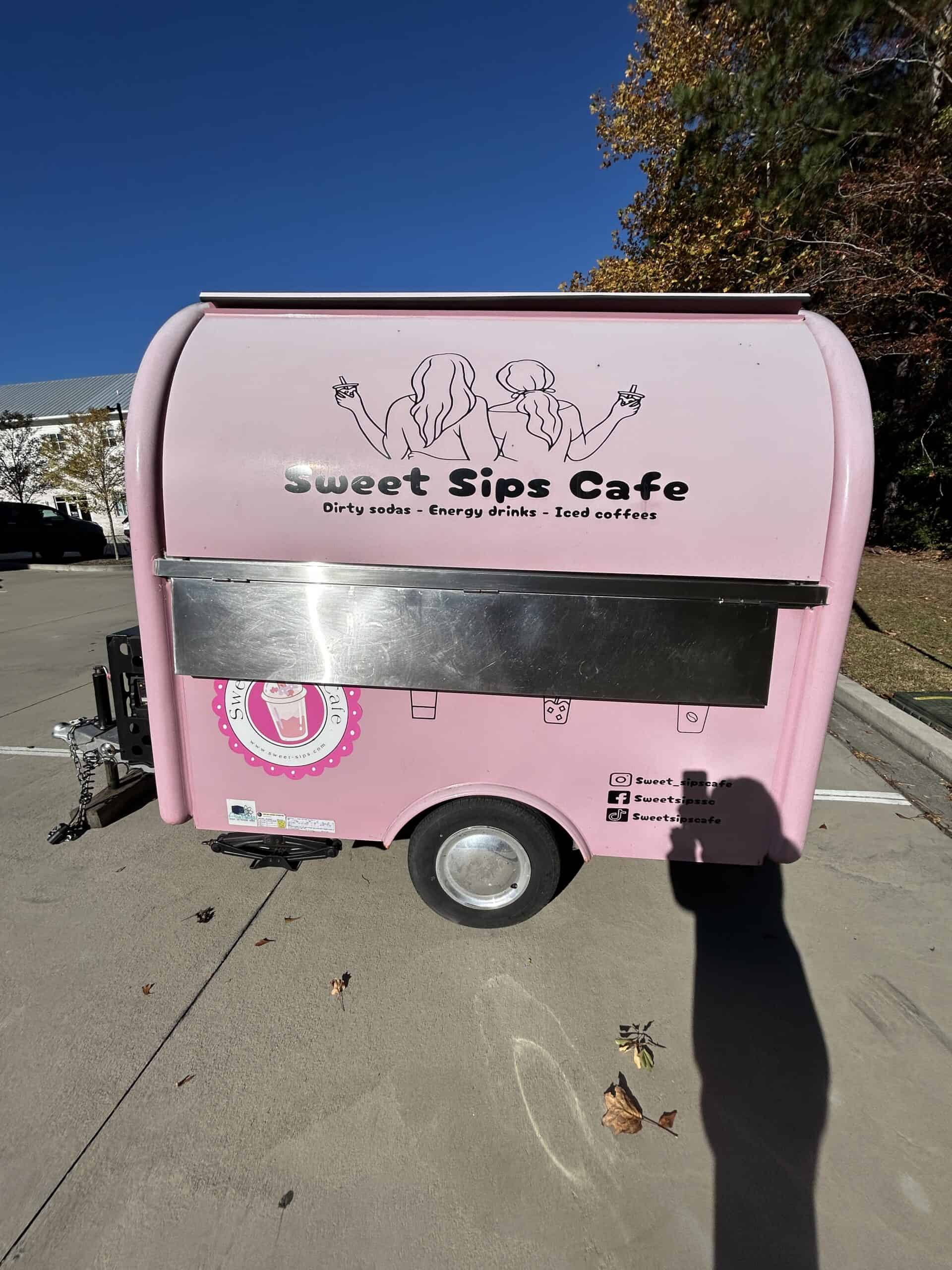
Food Truck Wraps in Charleston: Mobile Branding for Lowcountry Food Entrepreneurs
Wrapstar blog · June 2, 2026
If you’re running a food truck in Charleston — or about to launch one — your wrap is doing three jobs at once: it’s your signage, your social-media background, and your biggest piece of advertising before a customer ever tastes the food. Done well, a food truck wrap in Charleston turns every farmers market, brewery lot, and event line into earned media. Done cheap, it peels off the corners by the third Lowcountry summer and you’re back at the printer six months later. Here’s what actually matters when you wrap a food truck for the Charleston scene.
Why food truck wraps win in Charleston specifically
The Lowcountry food-truck market is one of the densest in the Southeast. You’re competing with two dozen trucks at Park Circle, sharing space at Edmund’s Oast and Holy City Brewing, lining up at Spoleto, and chasing wedding-season catering gigs in Mount Pleasant and on Daniel Island. Customers see you for thirty seconds while they’re deciding what’s for lunch. A flat-paint truck with a printed banner taped to the side has already lost that decision before the menu opens.
A professionally wrapped truck does three things printed banners and paint never will:
- It photographs. Instagram and TikTok do half the work of marketing a Charleston food truck. A wrap that’s designed for the camera — strong colors, bold logo placement, no busy gradients in the photo zones — earns more user-generated content than any paid post.
- It survives. Lowcountry humidity, salt air, summer heat, and the occasional Edisto-side overnight all attack vinyl differently than a print banner. Cast vinyl from 3M, Orafol, KPMF, or Arlon — the four brands Wrapstar installs as a preferred installer — is engineered for it.
- It scales the brand. Your truck is your most expensive piece of physical infrastructure. Wrapping it turns that capital expense into the centerpiece of your brand system. Yard signs, menu boards, swag, all key off the truck.
Full wrap, partial wrap, or lettering — which fits a food truck?
Most Charleston food trucks land on one of these three approaches, and we’ll quote each option honestly when we look at the truck.
Full wrap. The whole exterior — every panel, every door, the back doors, often the roof line — finished in printed cast vinyl. This is the right call when your brand is photo-rich, illustration-heavy, or built around a color the truck didn’t come in. The cost is the highest single line item in your brand budget, but the wrap typically lasts 5–7 years with proper care.
Partial wrap. The high-impact panels (doors, side walls, the serving window surround) get printed wrap; the rest stays in the base color or gets a strategic accent. Good fit for trucks where the base color already works and you want to control cost without losing visual impact.
Lettering plus large decals. Cut vinyl on a clean base color, with a hero logo decal on each side and the menu callouts in printed graphics. Lowest cost path; works well when your truck color IS your brand color (red truck, red brand) and the imagery is clean and bold. We unpack the math on this approach in our lettering buyer’s guide.
What separates a food-truck wrap from a regular vehicle wrap
The biggest differences between wrapping a food truck and wrapping a Sprinter van or service truck are the surfaces, the rivets, and the heat profile. Food trucks tend to have:
- Riveted aluminum or fiberglass panels that need post-heat and edge sealer to keep vinyl down on every rivet head.
- Roof-mounted hoods, vents, and AC units that radiate heat onto adjacent vinyl. The wrap layout has to account for that — cheap vinyl will warp around the vent.
- A serving window that opens daily, putting flex and torque on the hinge area. The wrap line has to be planned around the open-and-close cycle.
- Greasy, sometimes scrubbed-with-degreaser exterior from operating around a kitchen. Vinyl prep before install has to remove every trace.
None of that is exotic — it’s just the difference between a shop that wraps food trucks routinely and a shop that’s about to learn on yours. Wrapstar has installed food-truck wraps across the Charleston peninsula, Mount Pleasant, Summerville, and West Ashley; we have the rivet roller and the post-heat process dialed in.
Design — what makes a food-truck wrap actually work
The best Charleston food-truck wraps share a few traits. We’ll push back if your concept misses these and explain why.
- One hero element, big. Your truck rolls past at 5 mph in line traffic. The single biggest design crime is trying to communicate five things — your name, your specialty, your hours, your IG handle, your story. Pick the one thing a stranger needs to know in three seconds and make it dominate.
- Menu cues, not menus. Don’t try to print the full menu on the wrap. Print the cuisine cue (“Lowcountry barbecue,” “wood-fired pizza,” “vegan tacos”) and let the chalkboard or digital menu carry the rest.
- Color contrast that reads from 50 feet. Pretty pastels disappear on a brewery lot at golden hour. Wraps that win in Charleston tend to use one bold color plus a high-contrast type color.
- Photo zones planned for Instagram. The serving window side will be in 90% of customer photos. Design that side with the camera in mind — clean negative space behind where customers stand, your logo placed where a phone naturally frames it.
- Permit info and DOT data placed deliberately. Required info has to land in legible heights; build it into the design rather than slapping it on after the fact.
How long does a food-truck wrap last in the Lowcountry?
Real numbers: 5–7+ years for cast vinyl on vertical panels, installed by a 3M-certified shop, with normal washing and reasonable care. Less on horizontal surfaces (hoods, roof line) that take direct UV all day. Far less on calendared vinyl from a print shop that doesn’t install vehicle graphics regularly.
The two biggest enemies of a Charleston food-truck wrap are: aggressive pressure washing (back the wand off the panels and don’t aim at edges) and parking under salt-air-exposed coverings near the coast for years on end. Both speed up vinyl aging. We cover the care routine in detail in our month-by-month Lowcountry wrap care calendar, and Quinn — our own owner Michelle Ryan’s right hand on content — keeps that piece updated when manufacturers refresh care guidance.
What it costs to wrap a food truck in Charleston
We won’t pretend to give you a single number — the variables are too real. A full wrap on a 16-foot food truck with a custom illustration runs different than a clean two-color wrap on a 20-foot trailer-style truck. What we’ll tell you:
- Lettering plus large door decals on a clean base color typically lands in the low to mid four figures.
- Partial wraps with printed graphics on the high-impact panels usually sit in the mid four figures.
- Full wraps with custom illustration and a color change typically run in the mid-to-upper four figures or low five figures, depending on size, complexity, and surface prep.
- Design time is real — if you don’t already have brand-ready vector files and a layout plan, expect a design line on the quote.
And if cost is the friction, we offer wrap financing — see our wrap financing breakdown for how the math works on a truck that’s earning revenue while it’s branded.
Working with Wrapstar on a food truck
The process we run every food-truck job through:
- Conversation — we’d rather over-ask about your menu, your event calendar, your existing brand, and what’s working/not working on your current branding before we touch a design.
- Site visit or detailed photos — we need every panel measured, every protrusion noted, every paint scratch flagged.
- Design — usually two to three rounds on a render of your actual truck before we approve for production.
- Production — printed and laminated in-house using approved vinyl and laminate combinations.
- Install — typically two to three days in the shop with the truck out of service; we coordinate with your event calendar.
- Walkthrough — care instructions, warranty paperwork, and a follow-up call at 30 and 90 days.
Frequently asked questions
How long does a food-truck wrap take from concept to install?
Four to six weeks is typical. About half of that is design rounds; the other half is production scheduling and the install itself. Rush jobs are possible (we’ve done them for new-launch trucks racing to a festival deadline) but the design compresses, which costs quality.
Can I wrap a food truck I’m leasing?
Almost always yes, but check your lease — some leasing companies require their approval for graphics, especially full wraps. A removable wrap is virtually invisible at end-of-lease; the lease language usually allows it more easily than people expect.
Will the wrap damage the truck’s paint or finish?
Not when it’s installed and removed correctly. We install on factory paint or properly prepped aftermarket finishes, and we remove with heat and adhesive remover rather than scrapers. Trucks come out the other side ready to repaint or sell.
How do I clean a wrapped food truck without ruining it?
Hand-wash with pH-neutral soap weekly. Avoid the pressure washer wand within 12 inches of any edge. Don’t use abrasive sponges, citrus solvents, or wax containing petroleum solvents. Quinn’s care calendar covers the month-by-month routine in detail.
Can the wrap be updated when my menu or branding changes?
Yes — and this is one of the underrated advantages of vinyl. Single panels or door decals can be reprinted and swapped without redoing the whole truck. If you rebrand, a full re-wrap typically runs less than the original because the truck is already prepped.
Let’s wrap your truck the right way
Wrapstar is a family-owned, 3M-certified shop in Ladson serving the Charleston Lowcountry. We wrap food trucks for new-launch operators and established names, design to deadline for festival debuts, and stand behind every install. Send us photos of your truck and a few words about your concept, and we’ll come back with a real quote and an honest design direction.
Ready to turn heads?
Free quote and design consult. Tell us what you’re wrapping and we’ll come back with options and pricing.
- Free design consult
- Financing available
- 3M-certified install
- Printed in-house
Loading the quote form… or call (843) 261-9727