
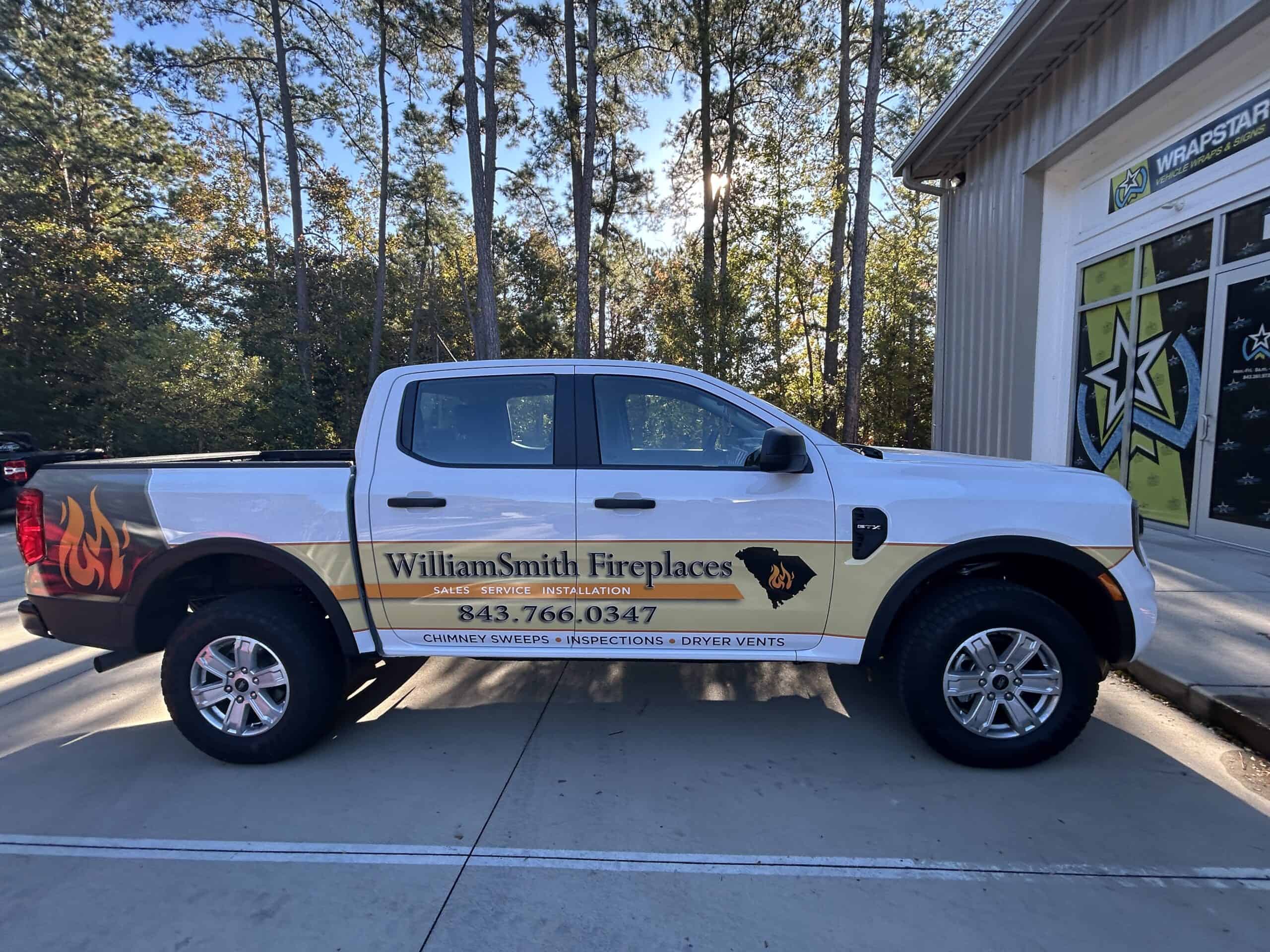
How to Care for Your Vehicle Wrap in Charleston’s Salt Air & Humidity
Wrapstar blog · April 2, 2026
Charleston is one of the toughest environments in the country for a vehicle wrap. We have salt off the harbor, summer humidity that holds water against every surface, UV intensity that ages everything faster, and the occasional tropical storm that throws sand at your car. A wrap that lasts 7 years in Phoenix might last 4 in the Lowcountry — unless you care for it properly.
This guide is the no-nonsense version of vehicle wrap care for Charleston-area owners. Written by Wrapstar Vehicle Wraps & Signs, a 3M Certified Graphics Installation Company in Ladson, SC. Follow these rules and a well-installed wrap will outlast its expected life. Skip them and you’re rolling the dice.
Why Charleston’s climate is uniquely hard on vehicle wraps
Three things make the Lowcountry punishing for vinyl: salt, humidity, and UV intensity. Salt air doesn’t damage vinyl directly the way it eats unprotected metal, but it does carry abrasive particles that work into wrap edges and accelerate edge lift. Boats and vehicles driven near the harbor see this fastest. Humidity matters because moisture trapped under the wrap (from improper installation, but also from normal seasonal expansion/contraction) creates micro-bubbles. Charleston’s summer dew point regularly exceeds 75°F, and that translates to constant moisture pressure against any imperfect seal. UV intensity in the Lowcountry runs roughly 30% higher than the national average due to latitude, low cloud cover, and reflective surfaces (sand, light pavement, water). UV is what fades wrap color over time and degrades the vinyl’s plasticizers.
The 7-step wrap wash routine (with what NOT to do)
Wrapstar’s recommended wash routine for Charleston wraps: (1) Rinse the vehicle with low-pressure water first to remove loose grit. (2) Apply automotive soap (NOT dish soap — dish soap strips wrap protectants) with a microfiber wash mitt. (3) Wash in the shade if possible — soap drying on hot vinyl is the #1 cause of streaking. (4) Use a two-bucket system (one for soap, one for rinse) to avoid grinding contaminants into the wrap. (5) Rinse thoroughly, top-down. (6) Dry with a microfiber drying towel or air-dry in the shade — DO NOT chamois (chamois traps grit and scratches the print layer). (7) Wash weekly during summer humidity peaks, every 2 weeks in cooler months.
What NOT to do: never use a high-pressure washer at close range (pressure can lift wrap edges), never use ‘wash and wax’ soaps (the wax doesn’t bond to vinyl and leaves haze), never use abrasive sponges, and never go through an automatic car wash with rotating brushes.
Parking choices that extend wrap life by years
The single biggest factor in wrap longevity is sun exposure. A wrap parked in a garage at night and out of direct midday sun during work hours can easily last 2 years longer than the same wrap parked uncovered. Practical hierarchy: (1) Garage parking overnight is ideal. (2) Carport or covered driveway is the next best. (3) Shade from trees during peak UV hours (10am–4pm) is the third option. (4) Direct sun all day is the worst case. For commercial fleets that can’t avoid daytime sun, rotating which vehicles get covered overnight parking extends fleet wrap life unevenly but cost-effectively. Even one extra year per truck across a 10-vehicle fleet is significant.
How to spot early signs of wrap failure
Catching wrap issues early often means a repair instead of a re-wrap. Watch for: edge lift at corners (small lifted areas around door edges, hood gap, mirror caps), color fading on the south- or west-facing panels, micro-bubbling along seams, water spots that don’t wash off (mineral deposits etched into vinyl), and any tear or scratch larger than a pencil eraser. Edge lift caught early can usually be re-adhered with proper heat technique — a 30-minute shop visit. Edge lift ignored for months turns into a full panel re-wrap. The same logic applies to small tears: a quick patch is cheap, a delayed repair often means the panel is too contaminated for clean adhesion.
When to call your installer (vs. fix yourself)
Things you can DIY: small surface scuffs (clean with isopropyl alcohol diluted to 70%), light bird droppings (rinse off ASAP — droppings etch vinyl finish in hours), and minor edge lift on flat panels using a hair dryer to re-activate the adhesive. Things to call us for: any edge lift on compound curves, color fading you want addressed, scratches deeper than the print layer, wrap removal (always — bad DIY removal damages factory paint underneath), and any structural damage from accidents. We do free wrap-condition inspections for Wrapstar clients and existing-wrap inspections for new clients considering refresh vs. re-wrap. The inspection is 15 minutes and tells you whether you have 6 months left or 3 years left.
Wax, sealant, and protectant: what’s safe for vinyl
Wrap-safe protectants are a category of their own. 3M, Meguiar’s, and Chemical Guys all make products specifically labeled for vinyl wraps — generally a spray-on, wipe-off finish that adds UV protection and water beading without containing solvents that damage vinyl. What’s NOT safe: any wax containing petroleum solvents (most traditional carnauba waxes), any ‘high-gloss’ coating designed for paint, and any product whose label doesn’t explicitly mention vinyl-wrap compatibility. Applied every 3 months during summer (less often in cooler months), a proper vinyl protectant can extend wrap life by 1–2 years and keep the color depth fresher between washes. We sell wrap-safe protectant in our Ladson shop, or order online — just verify ‘vinyl wrap safe’ is on the label.
Frequently Asked Questions
Can you wash a vehicle wrap in a car wash?
Soft-cloth car washes are usually safe. Avoid rotating-brush car washes and high-pressure spray washes — the mechanical force can lift wrap edges and damage the print layer. Hand-washing with a two-bucket system and a microfiber mitt is the safest option for Charleston wraps.
How often should I wash my vehicle wrap?
Weekly during Charleston’s summer humidity peaks (June through September), every 2 weeks during cooler months. Vehicles driven near the harbor or used for marine work benefit from more frequent fresh-water rinses.
Does salt air damage vehicle wraps?
Salt air doesn’t damage the vinyl directly, but it carries abrasive particles that work into wrap edges over time and accelerate edge lift. Vehicles parked near the harbor or used for daily commutes through coastal areas should be rinsed with fresh water more often than vehicles in inland Charleston neighborhoods.
Can I wax a wrapped car?
Use vinyl-wrap-safe protectants instead of traditional automotive wax. Products from 3M, Meguiar’s, and Chemical Guys make wrap-specific finishes that add UV protection without solvents that damage vinyl. Never use carnauba-based traditional waxes on a wrap.
How long should a vehicle wrap last in Charleston?
A 3M-certified professional install with premium vinyl lasts 5–7 years on most cars in Charleston, depending on parking conditions and care routine. Garage-parked, well-cared-for wraps reach the upper end of that range. Direct-sun, neglected wraps may need refresh in 3–4 years.
Need wrap care help?
Wrapstar offers free wrap-condition inspections for clients and prospective clients in the Charleston area. Read our older companion guide: 5 Essential Tips for Maintaining Your Vehicle Wrap. Call (843) 261-9727 or visit our contact page to schedule an inspection.
Ready to turn heads?
Free quote and design consult. Tell us what you’re wrapping and we’ll come back with options and pricing.
- Free design consult
- Financing available
- 3M-certified install
- Printed in-house
Loading the quote form… or call (843) 261-9727